
I paid $175 at Walgreens the other week and I was pretty livid.
Not at Walgreens. They’re just doing their job. And not at my wife’s doctor, who prescribed meds she actually needs. I was mad at...oh ya know...the world! Since losing my job, we've had to sort out our own health insurance through the exchange, which, fun fact, right about 23 million Americans are doing right now. We picked a plan, got everything set up, and for a minute there it felt like we’d crossed a finish line. Health insurance. Meds. Vision. Dental. All covered. Deep breath. Phew, okay. We’re good.
Then the pharmacy total hit $175 and we were both standing there like, what about our copay?
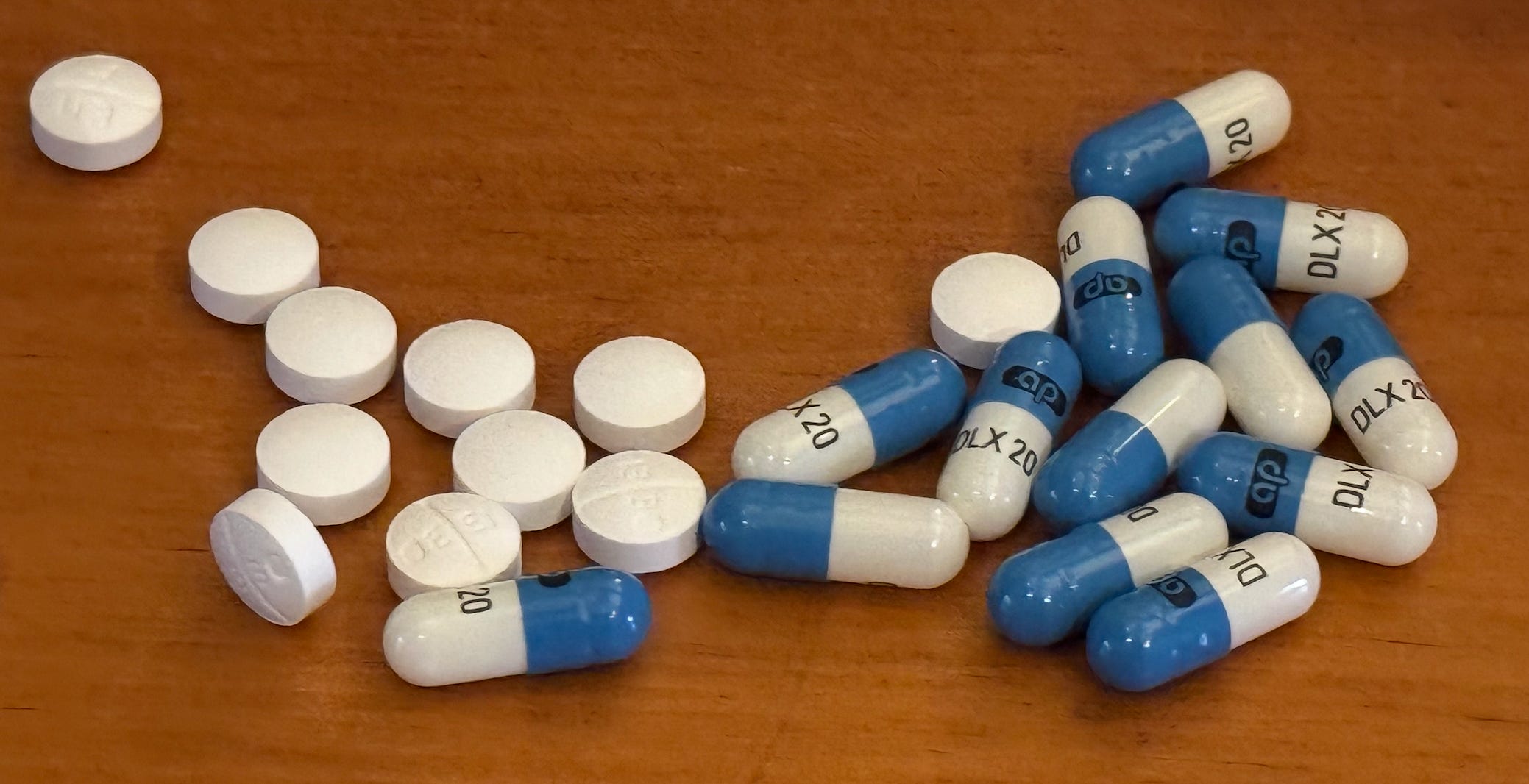
Turns out our new plan has tiered medication pricing. These meds fell into tiers two and three, which means insurance barely helps. And to add insult to injury, it doesn’t even count toward our deductible. It felt a little like lighting money on fire. But we needed the meds so we paid.
I was mad for about an hour. Not all-day mad. More like “I have a splinter I can’t get out” mad. Because I thought I had this figured out. And I didn’t. And this was just one more kick in the crotch from a job loss that happened months ago but keeps finding new ways to remind me it’s not done with me yet.
But then I sat down to write. And as I started processing, I realized that $175 wasn’t just a pharmacy bill. It was tuition. The cost of learning something I didn’t know I needed to learn.
So this week, let’s talk about unexpected tuition, the lessons that show up disguised as bills, setbacks, and bad days, and how to actually learn from them.
The Long Tail of a Bad Day
When something big goes wrong in your life, there’s a moment where most everyone rallies (hopefully). You lose a job, and people check in. You go through a breakup, and friends show up with pizza and opinions. There’s an initial blast of chaos, and then you handle it. You make the calls. You update the resume. You pick the insurance plan. And at some point, you exhale and think, okay, the worst part is over.
It’s not.
Big disruptions don’t stop when the crisis ends no matter how much you want them to. They just sorta stop being so loud. But what follows is quieter and more insidious. A pharmacy bill you didn’t budget for. A networking event that makes you feel like you’re begging. A random Tuesday where you realize you haven’t updated your LinkedIn and now you’re staring at your profile photo from three years ago wondering if that person even exists anymore.
These aren’t the main event. They’re aftershocks. And they hit you harder than you’d think they would mainly because you stopped budgeting emotional resilience for them.
Psychologists call this cumulative adversity, the idea that stressful events don’t happen in isolation. They compound. One stressful event doesn’t just create one problem. It sets off a chain of smaller ones. Financial stress chips away at your confidence. Uncertainty about work messes with your sleep. Bad sleep makes you more impatient. And then one day you’re standing in a Walgreens losing your mind over a freaking copay, and you can’t figure out why it feels so damn personal.
Well, it feels personal because it is.
Every little aftershock is a reminder that the thing you thought you’d handled is still handling you.
And the really awful part is that nobody warns you about this phase of the game. The initial crisis gets a playbook. Lose your job? Here are five steps. Going through a divorce? Here’s a checklist. But nobody hands you a guide for month four, when the adrenaline is gone and the surprise expenses start rolling in like a subscription you forgot to cancel.
So if you’re in that stretch right now, the part where the big thing happened a while ago but little things keep catching you off guard, you’re not falling behind. You’re in the long tail. And it’s completely normal to be kinda pissed off.
The question is what you do with that annoyance.
Hey guys, tired of nodding along when people talk about AI? I’m running a "Making Sense of AI" workshop on Feb 25th.
Clear explanations, live demos, and honest talk about what's worth your time.
No tech skills required. Just curiosity. Grab a spot.
The “I Had This Figured Out” Trap
There’s a special kind of frustration that comes from being surprised by something you thought you already had figured out. It’s not just the money or the inconvenience. It’s something else.
You did the work. You made the calls. You compared the plans. You picked one. And for a brief, beautiful, shining moment, you got to check that box and move on with your life. You were an administrative god.
Except you weren’t. Not really. And that’s kinda what stung the most standing in that Walgreens. Not the $175. The fact that I’d done everything right and it didn’t seem to matter.
Your brain does this thing where finishing a task feels the same as solving a problem. Psychologists call this the completion bias. Your brain looooovvves checking boxes. It gives you a little hit of dopamine every time you do. And once that box is checked, your brain files the whole thing under “done” and moves on and might even get a little sassy about it.
But complicated problems don’t stay solved for long. They evolve. The plan you made with the information you had was the best plan available at the time. And that doesn’t make it wrong; it just makes it incomplete. And there’s a big difference there, even if they feel identical when you’re standing at a pharmacy counter doing math in your head.
I think this is where a lot of people get stuck after a major life change. Not in the crisis itself, but in the gap between “I handled it” and “oh crap, there’s more.” That gap is disorienting. It makes you question your own competence. You start thinking, how did I miss this? And then that spirals into, oh no, what else am I missing?
The answer, by the way, is all sorts of things. And that’s okay.
The fix isn’t to become some hyper-vigilant worst-case-scenario planner who stress-reads insurance documents at midnight. The fix is to change what “handled” means in your head. Stop treating it like a finish line. Start treating it like a first pass. You did the best you could with what you knew. Now you know more. So you adjust.
That’s not falling down. That’s just how complicated life things work.
Tuition, Not Punishment
That afternoon at the pharmacy, I had a choice. I could keep being mad about the $175. Or I could decide it taught me something.
I went with option two. And the moment I did, the whole thing shifted. Not the facts. The facts were the same. The meds still cost too much (insert rant about healthcare in America here). The insurance plan still had gaps I didn’t know about. But the story I was telling myself changed. It went from “I got screwed” to “now I know.” And those are two very different places to operate from.
That’s the difference between tuition and punishment. Punishment says, “I should have known better.” Tuition says, “Hey you just learned something!” Same event. Completely different vibe. One keeps you stuck replaying the mistake. The other gives you something to carry forward.
And this doesn’t just apply to pharmacy bills. Every unexpected hit after a major life change is trying to teach you something, if you’re willing to sit with it long enough to figure out what that something might be.
So here’s how to start treating your setbacks like tuition instead of punishment.
Ask the one question that matters. After something catches you off guard, stop and ask yourself, “What did this just teach me?” Not “why does this keep happening” or “what’s wrong with me.” This one act can turn a frustrating moment into usable knowledge.
Separate the surprise from the problem. Half the frustration of an aftershock is the shock itself. You’re not just dealing with the issue, you’re dealing with the fact that you didn’t see it coming. Those are two different things. Name them separately. The surprise is just your expectations catching up to reality. The actual problem is usually smaller than it feels in the moment.
Stop expecting a clean ending. Big life changes don’t send a final bill. They send installments. The sooner you accept that, the less each surprise will knock you sideways. You’re not doing it wrong. You’re just still in it. And “still in it” is a completely valid place to be. (More on handling hard things better in a future issue. Stay tuned.)
In Conclusion
That night, I did what any self-respecting angry person with Wi-Fi would do. I went down a rabbit hole (pun intended). I spent about an hour researching prescription drug pricing and found out there’s a whole world of options I never knew existed. Washington state has a free discount card called ArrayRx. Mark Cuban has a whole pharmacy company built around transparent pricing. GoodRx is out there doing its thing.
I ended up going with Amazon Pharmacy. And yeah, I don’t love giving more money to Amazon. But I got a 60-day supply of my trazodone (I have insomnia, by the way) for under $3.
Three dollars. That’s better pricing than I had when I was employed with fancy corporate insurance.
Turns out the simplest answer was extraordinarily hard to find. Not because it was hidden. Because I had no reason to go looking until a Walgreens receipt made me mad enough to try.
So again, that pharmacy trip was my tuition. But the cool thing about tuition is that it is an investment that pays for itself if you do something with what you learned. I was shaking angry at a pharmacy counter on a Tuesday afternoon. But by that evening, I’d found a better solution than the one I’d had for years.
Sometimes the best thing that can happen to you is getting a bill that feels like a slap in the face. Not because anything about all this is fair. But because the anger lights a fire in you. And every once in a while, the thing you manage to find is better than what you had before everything fell apart.
As always, thanks for reading,
Ever forward,
— Derek (aka Chief Rabbit)
Oh hey, speaking of learning things. I've got a new daily newsletter that breaks down AI, one term at a time. Think of it like a word of the day for AI terminology. 60 seconds a day to help you sound like you know what you're talking about.
Check it out ⤵︎⤵︎⤵︎