

A few months ago, I had a panic attack.
It came exactly one week after I lost my job. I had been putting up a good front. Charging forward. Saying all the right things. But then someone from the company texted me. And in that exchange, I broke.
I don’t remember much. But I do remember collapsing in my kitchen, phone in hand, muttering to myself over and over:
It’s okay, I’m okay. It’s okay, I’m okay. It’s okay, I’m okay. It’s okay, I’m okay.
This went on until I realized my wife was holding me. I was on the floor and I was sobbing.
So I dunno if anyone reading this has had a full on actual panic attack, but it isn’t pretty. You get nauseous. You sweat and shake. Your heart races, your chest gets tight, it’s hard to breathe. I could go on, but you get the point. You feel a little like you are dying; you’re not, but it feels like it.
Oh and have I mentioned that I have generalized anxiety disorder (GAD). It used to feel strange to admit this. It felt like a secret I should keep. But about 19% of U.S. adults have been diagnosed with an anxiety disorder at some point. And recent surveys show roughly 12-18% report current symptoms. You’re not alone. I’m not alone.
So this week, let’s talk about anxiety
What Anxiety Actually Is (And What It Isn’t)
Alright, so let me begin with what actually happened in my brain when I got that text that sent me into panic mode.
You probably learned about this in high school science class, but as a refresher, let’s talk about your amygdala. It is a small, almond-shaped part of your brain and it is your threat detector. It is constantly scanning everything you experience for danger. When it finds a threat, boom! it hits the alarm.
When this happens, your heart rate spikes and adrenaline floods your system. You’re ready to fight or to run like hell.
And generally this is a good thing. This is what kept our ancestors alive when they ran into predators. The body is doing exactly what it has evolved to do.
But my amygdala wasn’t responding to a dinosaur or a tiger or Gary Busey. It was responding to a text message.
That panic attack was a false alarm of the old survival system. My body thought it was in danger when it wasn’t. And because the amygdala works faster than your rational brain, you can’t really reason your way out of it in the moment. I was amazingly fortunate not to be alone. My wife was there, she held onto me, she talked me down and helped me breathe. That got me through the moment. But it was a bandaid. It doesn't fix what's happening in the brain.
When people have anxiety (as opposed to just good old fashioned heightened concern) the alarm system just goes to eleven. And at times, you may see threats and danger everywhere.
The most mundane things can become a chance for your brain to catastrophize. Your body just kinda stays in a low-grade constant state of alert, burning through energy, waiting for the next threat…it’s great. Juuust so great.
You’re not weak and you’re not broken. Your alarm system is just stuck in the “on” position. And if you happen to be wired this way, well, now you know what you're dealing with.
So what if the goal isn’t to eliminate anxiety completely? What if it’s learning to recognize when your amygdala is giving you useful information versus when it’s just misfiring?
Things That Don’t Work (But People Try Anyway)
So you’ve got anxiety. Now what?
Well, if you’re like me, you probably tried a bunch of things that seemed like they should work but, ya know, did not.
Ignoring it: Ah the old classic. Just don’t think about it and stay busy. Keep on moving. But ignoring it is like ignoring the check engine light in your car. Eventually, something breaks.
Avoidance. The dear cousin of ignoring. If certain situations trigger your anxiety, just don’t go to those situations. Problem solved. Except avoidance teaches your brain that those situations really are dangerous. So your anxiety gets worse. And your world gets smaller.
Just think positive thoughts: I am as plucky as the next guy. I can Ted Lasso with the best of them. But you can’t positive-think your way out of a panic attack. Your amygdala doesn’t care about your gratitude journal. It’s already decided you’re dying.
Powering through: Basically, rub some dirt on it and get back in there. This was good enough for dad, it should be good enough for you. I really want this to work. It is beyond ignoring it, it is thinking that if you just toughen up or something it’ll all just go away. This doesn’t fix anxiety. It just adds exhaustion on top of anxiety and adds a healthy touch of guilt. Now you’re anxious AND tired. Nice work champ.
Self Medicating: Alcohol, weed, whatever numbs it for a few hours. Yeah, that’s just borrowing calm from tomorrow. You still have to pay it back. With interest. I'm not saying you can't have a drink to unwind. But using it to manage anxiety? That's a whole other ball of wax.
By and large these don’t work because none of them actually address what’s happening in your brain.
So what does work? Let’s talk about that next.
What Actually Helps
Alright, so what will actually fix you.
Nothing.
Sorry, but nothing will fix you. Because you are not broken. You need some regulation, but you don’t need fixing. So what can help.
Well…don’t hate me. it’s boring. And you might roll your eyes. But the number one thing is….breathing. You just need to know how.
I know, I know. You've been breathing your whole life, totally self-taught, I get it. But there’s actual science at work here around breath work. When you’re anxious, your breathing gets shallow and your body interprets shallow breathing as danger. You can work around this, by using different breathing techniques.
My go-to is box breathing. Breathe in for four counts. Hold for four. Out for four. Hold for four. Repeat as needed. This has a way of telling your nervous system that you are safe. Another good one is the physiological sigh. Two quick inhales through your nose, then one long exhale through your mouth. It resets your nervous system faster than regular breathing. Stanford neuroscientist Andrew Huberman has covered this extensively and it's effective for acute stress.
Of course, if you’re in the middle of a full panic attack, breathing techniques might not stop it completely. Sometimes the train has already left the station. But they can help you ride it out without making it worse. And over time, they can help prevent the next one.
Beyond that, here are a few other things to consider:
Grounding techniques. Name five things you can see. Four you can touch. Three you can hear. Two you can smell. One you can taste. This pulls you back into your body and out of your spiraling thoughts.
Daily rituals. Not massive lifestyle changes. Small, predictable moments that tell your brain: this is safe. Morning coffee in the same chair. A walk around the block with the dogs. A few minutes of reading before bed. We are creatures of habit and these habits lend us stability.
Name it out loud. Say "I'm having anxiety right now." Not to fix it. Just to acknowledge its presence. This little act moves the experience from your amygdala to your prefrontal cortex. You shift from "I'm dying" to "I'm observing that I feel like I'm dying." The idea here isn't to stop feeling anxious. It's to stop believing every anxious thought.
Get help: Ya know, therapy. Medication. Both if you need both. I was against this for a long time. I thought I should be able to handle it myself and that meds were for people who had it far worse than I did. But anxiety isn't something you can willpower your way out of. It's brain chemistry. And sometimes brain chemistry needs adjustment. I've been on meds for a while now and my baseline has shifted. I still get anxious. But I'm not constantly running hot.
Just know that getting help takes time. And it can be messy. My first round of meds was a disaster. My anxiety monster turned into the Hulk. So my doctor and I had to try another kind, adjust the dosage, and figure it out through trial and error. But it has been so worth it for me.
And maybe most importantly: know you’re not alone. About 31 million American adults have an anxiety disorder. You’re not broken. You’re not weak. Your brain just works this way. And there are a lot of us out here figuring it out together.
None of this is a cure. There isn’t one. But these things help. And help is WAY better than no help. That’s just math folks.
Pretending to be normal is exhausting. I’ve spent my whole life pretending I’m okay when I’m clearly not.
Jenny Lawson (The Bloggess)
Conclusion
I will probably always have anxiety. I suspect it is just how I am wired.
To add insult to injury, both my kids have anxiety. And my dog. That’s right, even my damn dog has anxiety.
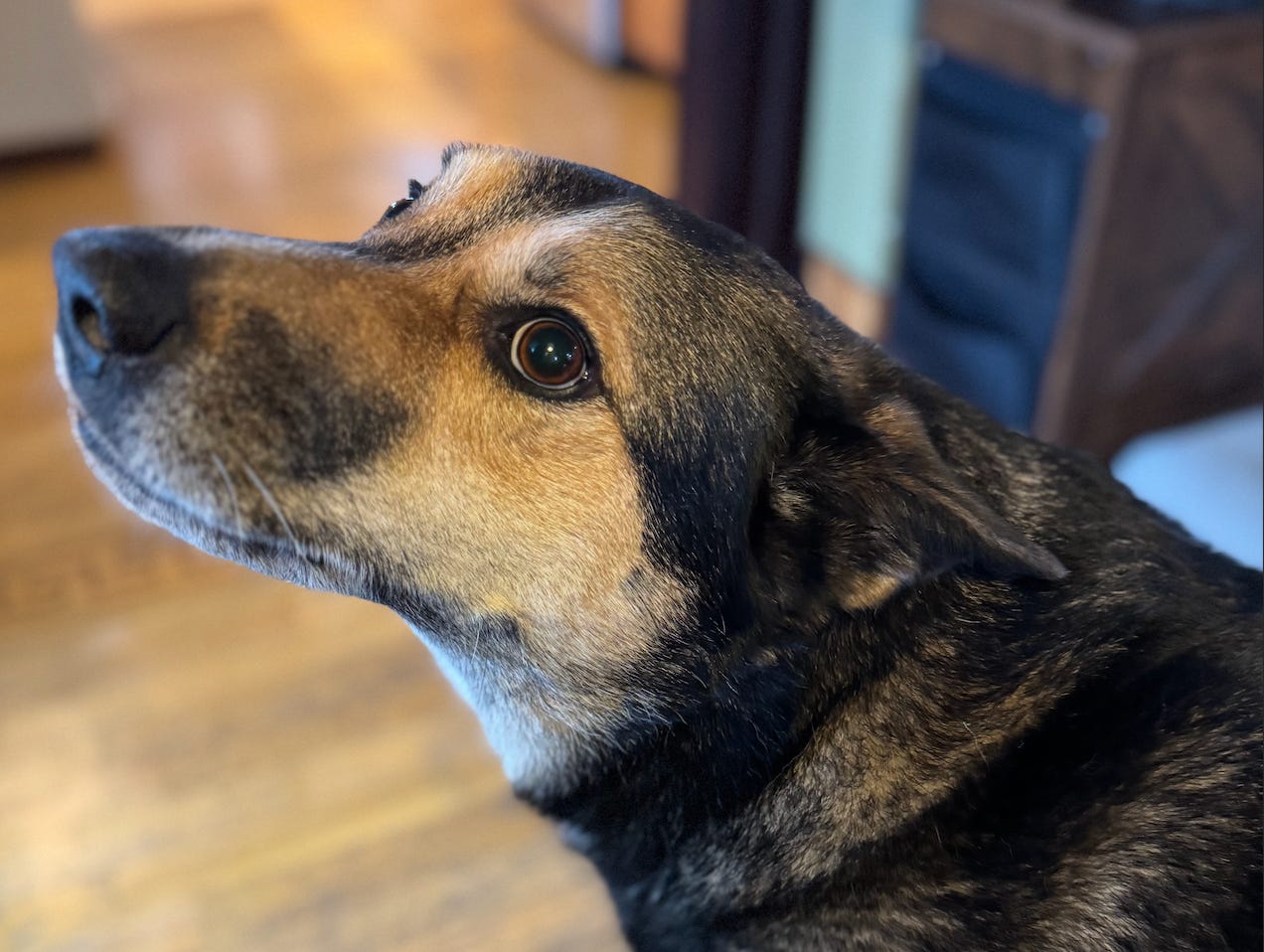
I quoted stats on anxiety earlier, but I often wonder how many people out there are walking around ignoring, self medicating, or just powering through. Quietly miserable. One text message from falling apart.
But you don’t have to wait for a breakdown to start being honest about what you’re feeling. In fact, please don’t wait for a breakdown. Cause unfortunately (at least for me) when a panic attack hits, well the whole day is kaput. All that adrenaline and stress just wiped me out. My focus was shot and I just didn’t feel quite right for the whole rest of the day. And again, I had someone there with me. If you're alone when it hits, breathe. Do your best to ground yourself. Call someone if you can. You don't have to white-knuckle it by yourself.
You can start right now. This moment. Say it out loud if you need to.
Your alarm system might be stuck. But you’re not stuck with it alone. There are a lot of us out here. Doing our best. Figuring things out. Breathing.
It’s okay to not be okay. And it’s also okay to ask for help.
And sometimes, that’s the bravest thing you can do.
Ever forward,
— Derek (aka Chief Rabbit)
If you need help right now:
988 Suicide & Crisis Lifeline: Call or text 988 (available 24/7)
Crisis Text Line: Text HOME to 741741
NAMI Helpline: 1-800-950-NAMI (6264) for information and local resources
If you’re looking for a therapist:
Psychology Today: psychologytoday.com/us/therapists (searchable directory)
SAMHSA Treatment Locator: findtreatment.gov
Great post! thank you for sharing. Anxiety and depression and other mental health issues are so tough. And knowing you’re not alone is a really big deal.
Great words! Great advice!