


Not long ago, someone stole my sister’s dog George.
Her ex left George in the car when he ran into the store. Then someone stole the car with George inside. My sister called me frantic and in tears. Furious and beyond sad, she didn’t know what could be done.
The next few hours were a blur of anger and tears and frantic posting online. We called vets. We messaged shelters. We posted everywhere we could think of.
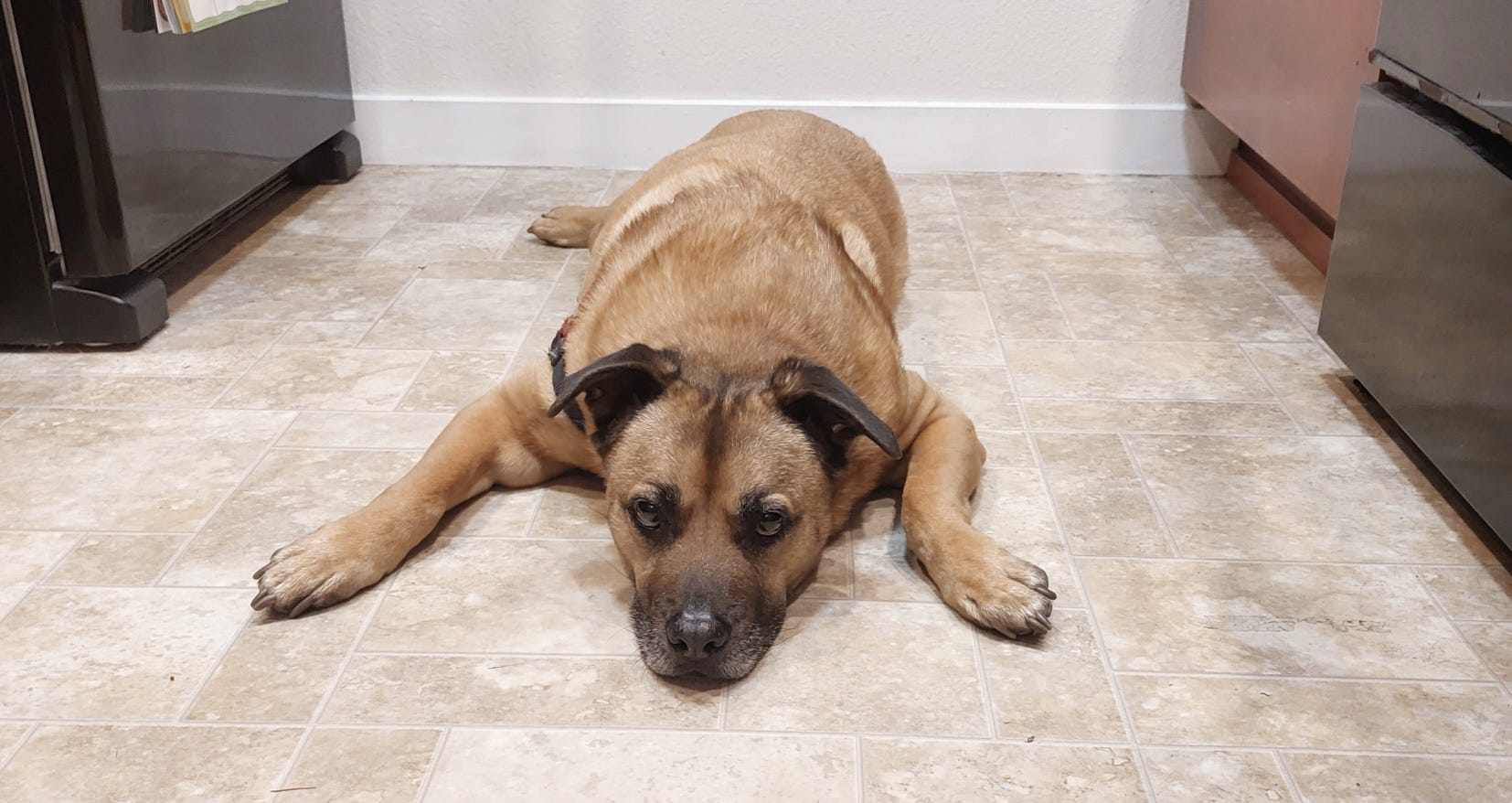
And then the most amazing thing happened. Someone responded to my post on Nextdoor.
Turns out, George had been abandoned at Richmond Beach just outside of Seattle. He found a house. He barked until they opened the door. They saw online that he was missing and they called. And against all odds, he was home.
With the good news in hand, I returned online and posted the update everywhere. And then the comments started rolling in. Dozens and dozens of them. Total strangers saying how relieved they were. How happy this made them. How much they needed to hear something good today.
It was amazing that George came home, but it was also amazing that so many people cared that he did. People I’ve never met were genuinely invested in this outcome. And for days after more and more comments came.
We’re all walking around carrying a lot right now. Bad news finds us whether we look for it or not. It shows up in our feeds, our inboxes, our conversations. But good news? We have to share that ourselves.
So this week, let’s talk about Cognitive Disproportion and how to put more good news back into the world.
Bad News Has Momentum. Good News Doesn’t.
Cognitive Disproportion is what happens when bad news spreads automatically while good news requires intentional effort to circulate.
Bad news has built-in momentum. A crisis spreads because people feel compelled to warn others. A scandal spreads because it triggers outrage. A disaster spreads because our brains are wired to pay attention to threats. We evolved this way. Noticing danger kept us alive.
Psychologists call this negativity bias. Our brains give more weight to negative experiences than positive ones. But in the modern world, that same wiring works against us. Bad news doesn’t just spread faster. It sticks harder. It occupies more mental real estate. It shapes our perception of reality more than good news ever could.
Good news doesn’t work like that. When something good happens, it often sits there quietly unless someone decides to share it. George coming home was a relief to my family. But it only became relief for strangers because I posted the update. Without that intentional act, it would have stayed private. Unreported. Invisible.
And so we end up with a disproportion in what circulates. Not because good things happen less often, but because they require us to actively amplify them while our brains automatically amplify the bad. We feel like we can only post about the big things. The new job. The new baby. Meanwhile we get an onslaught of bad news everywhere we turn.
Think about your own feeds. How much of what you see is bad news that found you versus good news someone deliberately shared? The ratio is wildly skewed. And that skew shapes how we experience the world.
The problem isn’t that bad things happen. The problem is that good things happen too, and we’re not putting them back into circulation.
Wear the Hare. Rep the Warren & support the newsletter.
Why This Matters More Than You Think
The disproportion in what circulates isn’t just kinda depressing. It’s changing how we move through the world.
When bad news dominates your attention, it doesn’t just make you feel worse. It changes your behavior. You become more cautious. More skeptical. More withdrawn. You start to believe that most people are selfish, that most situations will go wrong, that effort doesn’t matter because the deck is stacked against you.
And I get it, it’s a rational response to the information you’re consuming. Your brain is doing what it’s supposed to do. It’s building a model of reality based on what it sees. And if what it sees is overwhelmingly negative, that’s the world it prepares you for.
The problem is, that model is incomplete.
Good things are happening all around you. Strangers are helping each other. Problems are getting solved. People are showing up. But if those moments never make it into circulation, they might as well not exist. Your brain can’t account for what it rarely sees.
This is why the comments on the George post hit me so hard. People weren’t just happy the dog came home. They were relieved to hear something good. Anything good. They needed it. They were carrying weight, and for a moment, that weight lifted.
That tells you something important about where we are right now. I think people are starving for good news. Not because they’re naive or want to ignore reality. But because they need evidence that everything can still work out. That effort still matters.
That people still care.
What You Can Actually Do About It
Bad news will find you. Good news needs you to find it and share it.
This isn’t about toxic positivity. It’s not about pretending bad things aren’t happening or forcing yourself to always look on the bright side when things are genuinely hard. The worst thing I could have done when my sister called me would have been to chirp about silver linings or talk about how this was all happening for a reason. That’s not helpful. That’s just being insufferable.
This is more about recognizing that when good things do happen, they need you to share them. Because they won’t spread on their own.
Start simple. Here are three ways to counter Cognitive Disproportion:
Ask yourself: What’s good? Through the course of the day, try to identify at least one good thing that has happened. Not perfect. Not life-changing. Just good. Someone let you merge in traffic. Your kid made you laugh. You found a great parking spot. You didn’t spill coffee on yourself during a Zoom call. Those moments are easy to overlook because they feel small. But small doesn’t mean unimportant.
Share it. Text a friend. Post it. Tell someone at dinner. It doesn’t have to be profound. It just has to be true. You’re not solving world hunger here. You’re just adding something good to the mix. And I mean it, do you know how often I spill something on myself during a meeting? If that’s a win for you, email me and tell me about it.
Go looking for it. Curate your feed. Follow accounts that share good news. Subscribe to the Good News Network. Actively, seek out the stories that restore a little faith.
Amplify others. When you find good news from someone else, respond. Comment. Share. Let them know it mattered to you. When people see that good news gets attention, they’re more likely to share it again. You’re not just spreading one piece of good news. Hopefully you’re encouraging a habit.
Right now, people need to know that good things still happen. That strangers still care. That effort still pays off sometimes.
They need to hear about George coming home.
In Conclusion
My sister and I were shocked at what can happen in a day. In the morning we were distraught and asking what was wrong with people. By the evening we were so happy and marveling at how kind people can be.
Sure, we could have locked in on the fact that her ex did something dumb or that people would steal a car or abandon a dog at a beach.
But how could we?
We were so unbelievably grateful that this dog had made his way home. That a family opened their door when he barked. That they cared enough to check Nextdoor. That dozens of strangers took time out of their day to say they were relieved he was safe.
The bad stuff happened. But so did the good stuff. And I am so happy I shared the update with folks and that it mattered to a horde of strangers.
I think right now we are all a bit out of balance and I think there is a lot in play that is designed to keep us that way. But you can decide to be part of the counterbalance. To escape that negativity bias and put more good out there.
Will it change the world? I don’t know. But it might change someone’s day. And enough changed days, for enough people, adds up to something. Just ask the strangers who needed to hear about George.
As always, thanks for reading.
Derek (aka Chief Rabbit)
P.S. I’d love it if you commented or wrote me and told me something good that happened to you recently. Again, it doesn’t have to be huge, just one good thing you want to share.
Enjoying Chief Rabbit?
This newsletter is free and always will be. But if you’d like to support this work, you can. You’ll get monthly Q&As, vote on topics, stickers, and help keep this ad-free.
RATE TODAY’S EDITION
You can also follow me on Threads where I sound off on all sorts of nonsense OR LinkedIn where I tend to be a touch more serious.
Also, thanks for being someone who reads to the bottom of the page, you’re a special human.
Absolutely loved this piece. The coginitve disproportion framing really clarifies why social media feels so exhausting lately. What's interesting is that even the people who commented on George weren't just happy about one dog, they were hungry for evidence that strangers still care. Kinda makes me wonder if we underestimate howmuch weight a single good news story can lift.
Hi Derek. I am glad to know your sister got her dog back. I enjoy reading good news. I subscribe to emails from Nice News, Note to Self, Daily Dig and Daily Purr (those last 2 are great for animal lovers). I enjoy good news in my email. Something good that recently happened to me: I am currently without a vehicle (it’s a bit of a story), but anyway, a friend has loaned me an extra vehicle that she & her husband have, but are not currently driving. It has truly been such a blessing. 🙂